
Covert Power, Manufactured Consent, and Iran’s glory
For decades, United States foreign policy has operated not only through diplomacy and open warfare but through a vast architecture of covert operations. From Latin America to Africa and the Middle East, intelligence activity has frequently preceded and prepared public justification for overt military action. Understanding contemporary events surrounding Iran requires situating them within a longer historical pattern of covert destabilization, narrative manipulation, and ideological warfare functioning together.
Covert Operations as a Longstanding U.S. Foreign Policy Tool
Covert intervention has been a structural component of U.S. foreign policy at least since the Cold War. Declassified documents show the CIA orchestrated secret operations to shape political outcomes abroad, including efforts to remove or undermine governments perceived as hostile to U.S. interests.
For example, Project FUBELT involved covert CIA efforts to prevent Chilean president Salvador Allende from governing and to promote the military coup that ultimately installed Augusto Pinochet.
U.S. covert programs in the Congo sought to remove Prime Minister Patrice Lumumba and install a more pro-Western leadership amid fears of Soviet influence and control over strategic resources.
Operations were not limited to regime change abroad. Programs such as Operation CHAOS monitored political movements and dissent, illustrating how intelligence logic framed protest itself as a geopolitical battlefield.
These cases show a recurring doctrine of covert action serving as an early stage of geopolitical management, shaping conditions before overt intervention becomes politically viable.
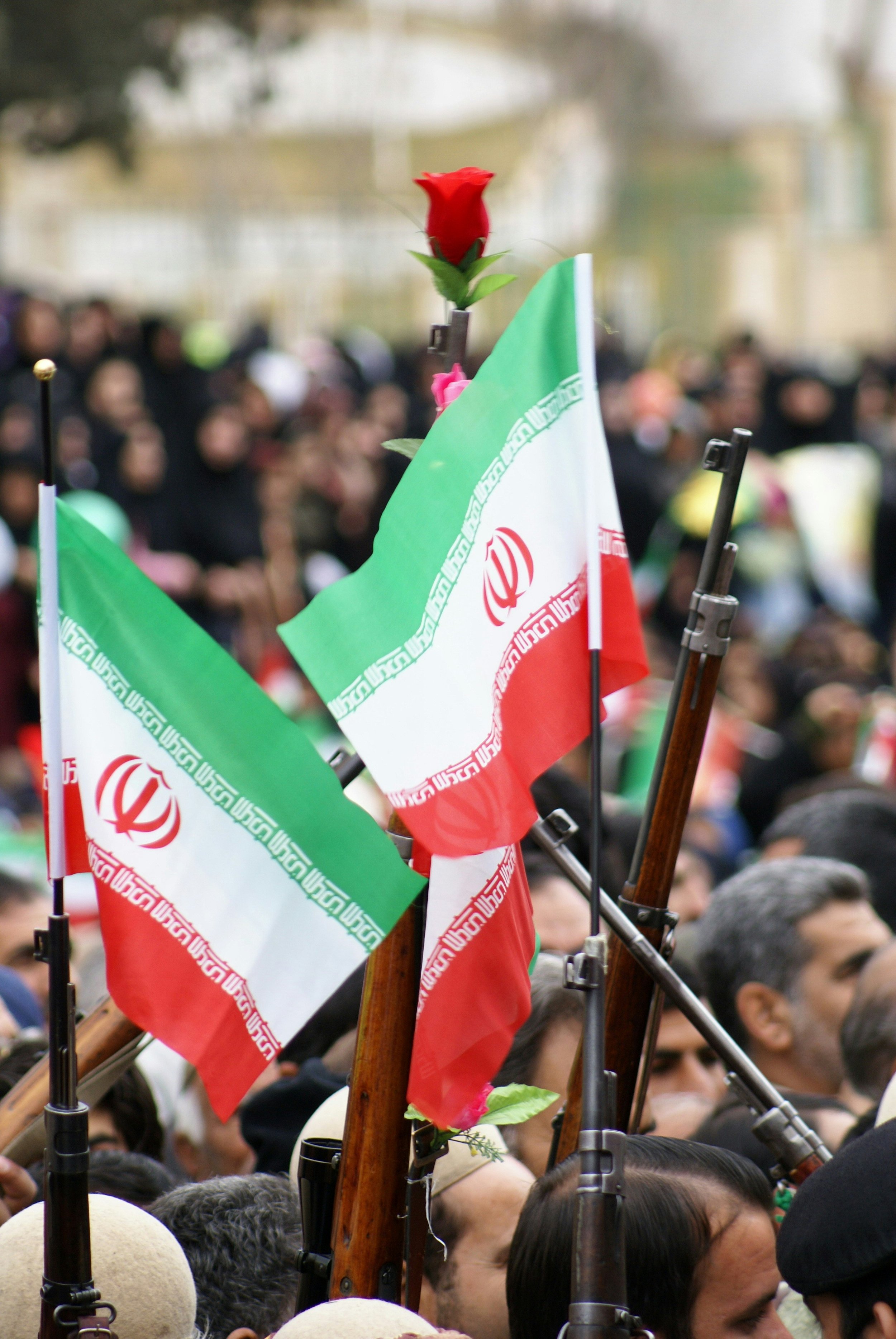
Ironically, after decades of meddling with regimes globally, and in the midst of ICE killings, the mainstream narrative being pushed by Washington is that Iran needs regime change because it crushes dissent.
Iran and the Role of Intelligence Operations
Iran has long been a central arena for intelligence competition. Analysts widely acknowledge deep Israeli intelligence penetration within Iran. Reports indicate Israeli intelligence agencies have conducted sabotage operations, assassinations, and infiltration campaigns, including smuggling drones and weapons into Iranian territory and relying on local networks for targeting military infrastructure.
Regarding recent protest movements, some defense analysts argue that foreign intelligence agencies exploit or even fuel outbursts of internal unrest. Experts cited by Al Jazeera suggest Israeli agents are likely active during protests, gathering information and amplifying demonstrations through communication support and exposure strategies.
This does not mean protests lack genuine domestic grievances. Iran has experienced real economic hardship and political repression. Rather, intelligence doctrine historically treats unrest as an opportunity, showing complete disregard for locals as it exacerbates violence and instability to create openings for influence operations.
Covert Action as Public Relations for War
Covert activity often functions as political preparation. Intelligence operations weaken adversaries materially while shaping narratives that make later military action appear necessary or inevitable.
The CIA’s Operation Mongoose against Cuba explicitly combined propaganda campaigns with intelligence networks and paramilitary planning designed to generate support for regime change. The integration of propaganda and covert action illustrates how military objectives are preceded by perception management.
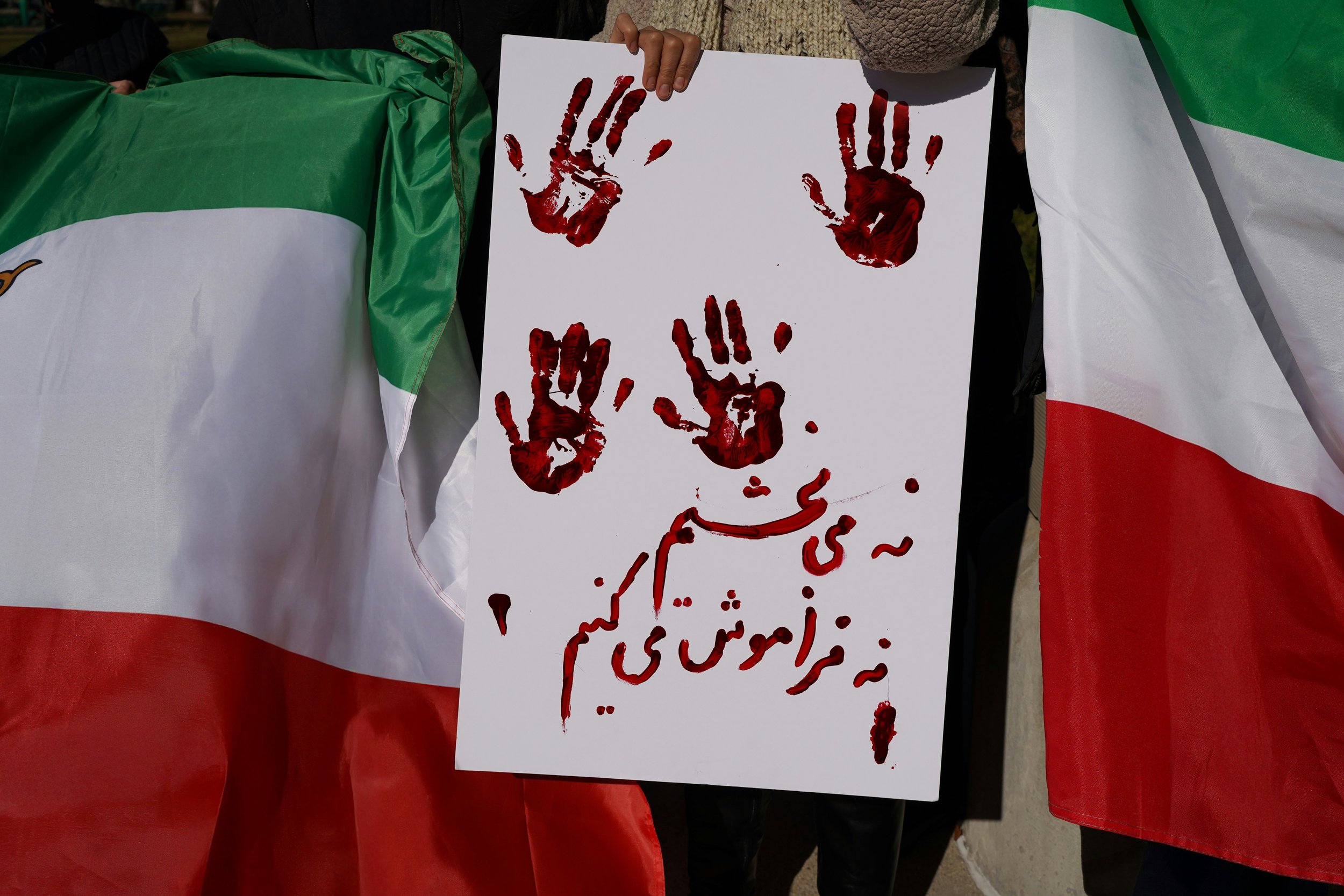
Recent reporting on U.S.–Israeli strikes against Iran shows leaders openly appealing to the Iranian population to rise against their government while military planning had been underway for months. Such messaging reflects a familiar pattern of intervention framed as liberation.
Strategic Interests Behind Destabilizing Iran
Geopolitical interests, as opposed to humanitarian concern, primarily drive Western confrontation with Iran.
Iran occupies a uniquely strategic position as it holds major oil reserves and sits beside the Strait of Hormuz, through which roughly one-fifth of global oil passes. Control over the region and its alliance structures therefore shapes policy calculations.
U.S. sanctions targeting Iranian oil networks and military capabilities explicitly aim to constrain Iran’s economic and regional power. Analysts consistently frame Iran as a strategic rival rather than a humanitarian crisis requiring protection.
In this context, claims that intervention primarily seeks to defend Iranian civilians are revealed as secondary to broader security and economic goals.
Propaganda as a Weapon of War
Noam Chomsky and Edward Herman’s theory of the propaganda model, developed in Manufacturing Consent, explains how media systems can help generate public approval for foreign policy agendas. The model argues that structural pressures — ownership, advertising dependence, sourcing from official institutions, and ideological framing — shape news coverage and “manufacture” consent for elite interests.
Chomsky argued that media distinguish between “worthy” and “unworthy” victims depending on geopolitical alignment, amplifying abuses by enemies while minimizing those committed by allies. Such asymmetry helps normalize interventionist policies.
After the Cold War, scholars influenced by this framework note that the “war on terror” replaced anti-communism as a dominant ideological filter, positioning Muslim societies as primary objects of fear and suspicion.
Islamophobia and the Manufacturing of Dehumanization
Western media discourse shows persistent stereotyping of Muslims and Islam within news narratives. A corpus-based analysis of British and American newspapers identified recurring propaganda frames portraying Muslims through conflict-centered and threatening imagery.
Social-media studies following terrorist attacks likewise found substantial waves of discourse blaming Islam collectively originating in Western countries.
Islamophobia thus functions not merely as prejudice but as a political narrative environment in which military violence becomes easier to justify. When populations are portrayed as inherently dangerous or backward, war appears defensive rather than aggressive.
Diaspora and Conflicted Reactions
Muslims and Iranians in the diaspora face a profound dilemma. Many oppose Iran’s government yet remain wary of foreign intervention by states historically hostile to their region and its people.
Evidence does not support a simple narrative that “Iranians are celebrating” Western or Israeli intervention. While some opposition voices welcome pressure on the regime, reactions are diverse and deeply divided, reflecting fear of war, nationalism, and distrust of foreign powers. Internal dissent and external intervention are experienced as separate realities rather than unified causes.
This ambiguity produces emotional and political tension in opposing authoritarianism while resisting geopolitical domination.
The West’s Limited Understanding of the Muslim World
Scholars of media and discourse repeatedly argue that Western audiences encounter Muslim societies primarily through conflict narratives detached from cultural context. The propaganda model suggests structural incentives favor simplified moral framing over nuanced understanding and credibility.
Practices condemned abroad are often judged differently when occurring within Western democracies, a discrepancy Chomsky highlighted in comparisons of media coverage of allied versus adversarial states.
Therefore, it’s worth questioning the moral authority of predominantly Christian Nations like the USA that condemn repression by States of the Muslim world, while employing aggressive policing, surveillance, sexist norms or legislations, and coercive policies domestically or internationally.
An Ode to Iran
Beyond geopolitics lies a civilization far older than modern conflicts. Iran is the inheritor of Persian traditions that shaped mathematics, poetry, architecture, philosophy, and music across centuries. Its major cities carry layers of history connecting ancient empires to contemporary life. Persian language, whose literature is one of the oldest, has influenced global aesthetics, from mystical poetry, to painting and classical music traditions.
Iran also possesses a long and complex history of women’s political movements. These struggles often being appropriated both by domestic elites and by foreign powers seeking moral justification for intervention. When women’s liberation becomes a slogan detached from Iranian voices themselves, it risks transforming genuine struggles into geopolitical branding.
Eradicating Supremacy
Genuine solidarity requires listening rather than imposing solutions. Policies framed as rescue can reproduce an older hierarchy that positions the West as civilizationally superior and Muslim societies as objects to be corrected or controlled.
Respecting Iranians means recognizing their agency, their diversity of political thought, and their right to determine their own future. Anything less risks repeating the same logic that has justified intervention, domination, and violence for generations.
The path forward is not domination disguised as liberation, but humility — the recognition that understanding must precede action, and that dignity cannot be delivered by bombs or propaganda.
Mirna Wabi-Sabi

Mirna is a Brazilian writer, editor at Sul Books and founder of Plataforma9. She is the author of the book Anarcho-transcreation and producer of several other titles under the P9 press.