
A Reflection on Catherine Liu’s Traumatized
Years ago, a public scandal centered musician Rihanna being abused by her then-partner Chris Brown. Capitalizing on her personal suffering, the media widely shared an image of her bruised face. At the time, I was in graduate school to become a professional psychotherapist, taking a class on domestic violence. Of course we talked about it. One of my colleagues expressed disappointment that Rihanna wasn’t using this tragedy to become a public advocate for victims of domestic violence. I wondered why that would be expected of her. She didn’t want to be a victim of domestic violence in the first, so why does she need to make it her identity? It’s up to her to decide what meaning to make of her experience and how much she wants it to shape her future.
Catherine Liu’s Traumatized suggests that the narrative of the victim-prophet crystallized thanks to Oprah Winfrey, whose use of her own trauma story as material for her talk show, alongside her masterful ability to connect with the audience on a personal level, created a new pathway to fame and a cultural framework around witnessing and consuming trauma stories. In the model of Oprah, celebrities feed their parasocial relationships with fans through performing their experiences of trauma, which seems to flatten very real differences in class and wealth through the shared humanity of pain. Because of Oprah’s legacy, when Rihanna publicly suffered, we had a collective expectation that she did not fulfill.
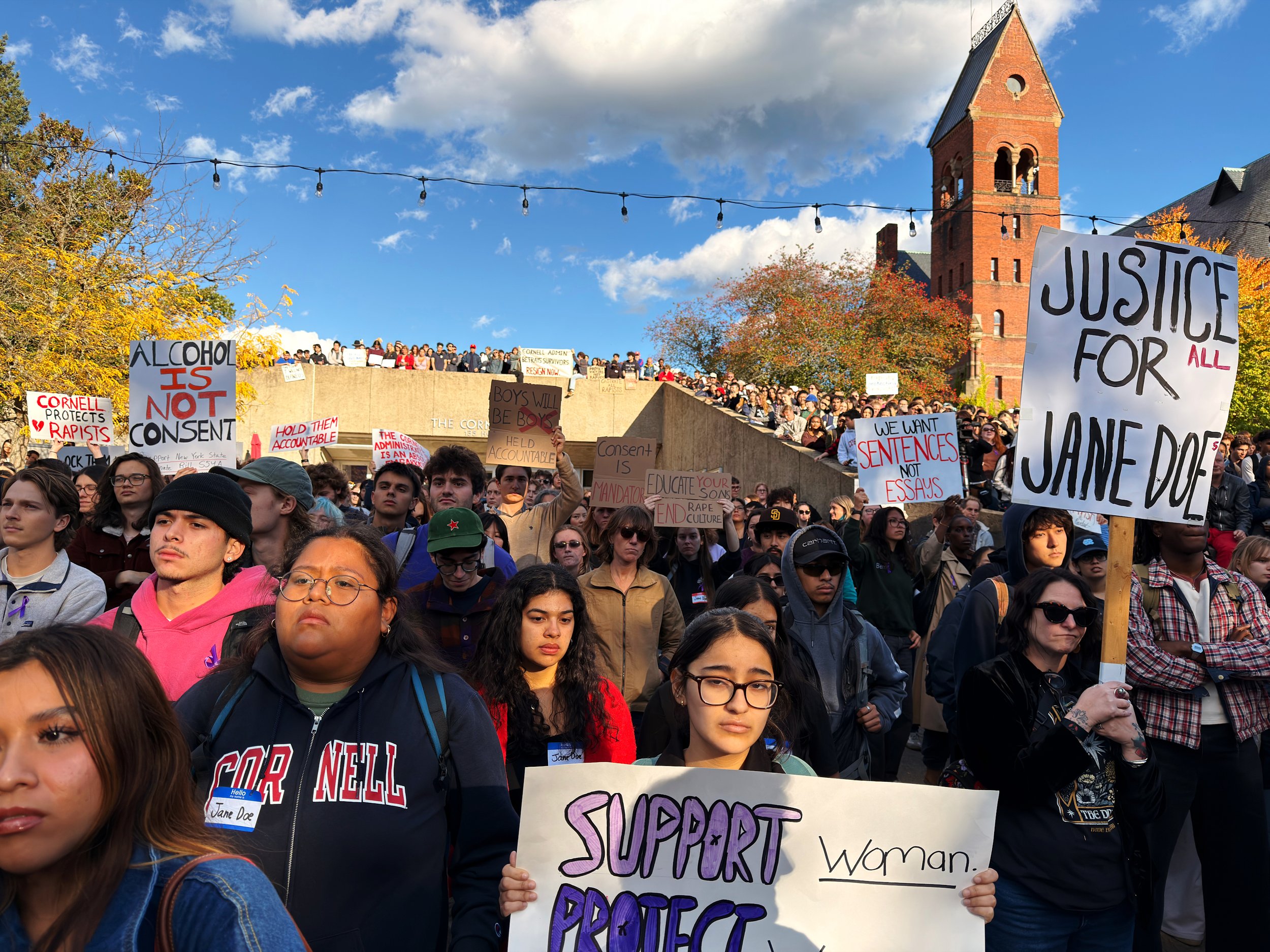
This cultural script is back in view with the “Cornell Seven” case – the alleged group assault of a severely intoxicated young woman, Jane Doe. Doe does not present according to the script of the innocent victim, as she had drank prior to the incident, was athletic, and has documented text messages following the incident with one of the alleged perpetrators that initially downplayed the violence and indicated her consent to some of what happened. Jane Doe does not offer a performance of trauma or healing message for us. She shows us what being harmed looks like in a very human way, messy and unscripted, by alleged perpetrators whose privilege and position allowed them to escape with minimal penalty.
Liu’s book examines the cultural trauma script of the victim-prophet and raises many questions about whether it serves us in preventing violence or helping trauma survivors to heal. We focus on the spectacle of Rihanna’s suffering and story of healing, and away from attention to how poverty and housing instability puts victims at risk of violence and creates more obstacles toward their getting to safety. We get caught up in the questions of whether the behavior of a real human being invalidates her claims to victimhood, instead of attending to the repeated protection of those with wealth and privilege from legal proceedings and consequences. The demands of a neoliberal, insurance-based healthcare economy has destroyed public institutions for the severely mentally ill and promotes treatment that does not serve the survivor of trauma.
Trauma-Informed Therapy
Including my internship, I spent four years in community mental health, and the majority of my caseload were those who had experienced poverty, neglect, violence, incarceration, and sexual coercion. Trauma-informed care was already a mandatory training when I started in the field. This approach encouraged us to meet clients where they were and explore the functional purpose of the sometimes very extreme emotions and behaviors they brought to the agency. The refrain of trauma informed care is to change the question from “What’s wrong with you?” to “What happened to you?” The theory was that these extreme behaviors, which drew unwanted consequences to our clients’ lives, may have begun as a way of self-protection against the harm they survived earlier in life.
The trauma-informed lens has proven so popular that British psychologists developed a coherent and comprehensive trauma-centered alternative to diagnosis, a framework called Power Threat Meaning. This narrative approach works with the clients to identify their symptoms and put them within the context of what threats they’ve experienced in life, identifying how their symptoms once helped reduce or fight off those threats. What is implicit in this discussion is the awareness that these behaviors are now causing their own problems—such as harming the client, damaging their relationships, making it hard for them to maintain a job or housing.
Centering the trauma-informed approach, I trained in Prolonged Exposure Therapy (PET), presented as a gold standard trauma treatment whose impressive success in resolving post-traumatic stress disorder from a single event is only matched by its incredibly high dropout rate. In this approach, clients are expected to tell the story of the worst thing that happened to them, over and over, until all the intensity of emotion drains away and they’re left with a calm, barely reactive presence. Many of us understandably are unwilling to push through that approach, which was highly favored by the military and supported its interests in hurrying soldiers through their post-traumatic stress symptoms so they could get back on the battlefield.
There are effective approaches that are far gentler. Eye-Movement Desensitization and Reprocessing (EMDR) and Internal Family Systems (IFS) are two of the more well-known modalities that allow participants to work through the cognitive and emotional disruption of trauma without requiring a detailed telling of the entire story.
The trauma-informed approach has yielded genuinely useful and healing perspectives. When clinicians approach extreme self-protective behaviors with judgment, contempt, and the coercive pressure to change, these attempts not only frequently fail but may elicit stronger protective responses. Beginning with the sincere attempt to understand the positive intentions at the heart of these behaviors, however, does lead to change. It is a paradox, and one I think most effectively held within a healing relationship in which the person offering compassion and curiosity is at a safe distance from the consequences of these extreme behaviors.
When trauma becomes the center of all distress and identity, its usefulness as a construct weakens.
Trauma-Informed Everything
According to the Diagnostic and Statistical Manual of Mental Disorders (DSM), trauma is an event that a person has experienced, witnessed, or heard about in which the suffering person has an experience of horror, helplessness, or feeling of imminent threat of bodily harm, death, or sexual violation. A few important components of this definition faded away once trauma emerged from psychology and became the subject of coaching programs, detox protocols, memoirs, and spiritual reels on Instagram. The most significant one is the criteria of powerlessness, horror, and imminent threat to body or life.
Why it matters: many experience life-threatening events without ending up with post-traumatic stress disorder. How much agency you feel, and how much support you have, make a huge difference in whether you experience something as trauma. A person trapped in a burning building is at risk of trauma for their feelings of helplessness and imminent danger to life. The firefighter who comes to the rescue enters the same disaster equipped with training, protective gear, a team, and a mission. All of these change the meaning of the experience and decrease the risk of trauma.
There is also much human suffering that is not trauma—overwhelming feelings of shame, social rejection, loneliness, or guilt, for example. What we do to protect ourselves against those feelings are more or less the same things we do in response to traumatic activation. For example, in recent years there were memes going around listing normal human behaviors as “trauma responses,” including excessive book reading. One might read books at the expense of the rest of their life as a way of avoiding the reminders of trauma, sure, but they might also be incredibly shy and sensitive to social rejection, preferring instead to be in the comfort of imagination instead of the risk of daily life.
You can’t divine what pain someone is avoiding based on what they’re doing to avoid it. But this popular story now makes people worry, when they enter therapy, that we’re going to discover a horrible buried secret that explains their suffering. This sometimes happens, but rarely.
This focus on trauma also obscures those chronic mental illnesses that can only be managed and will never be fully resolved through therapy, including severe cognitive impairment. In Traumatized, Liu points to the failures of deinstitutionalization, leaving hundreds of severely mentally ill people with little to no support in the community. These folks will never fit our narrative of what a trauma victim should look like, yet they deserve dignity and care, and need care to ensure they’re not left to fail at navigating a world with expectations they can’t sustain.
Mental Healthcare Under Capitalism
A core critique Liu offers brings attention to the capitalist pressures of productivity and profitability that shape how mental illness is understood, treated, and how that treatment gets funded. As Liu explains in depth, the DSM has no unifying theory of understanding mental illness and therefore no recommended methodologies of treatment. Its conceptualization of disease comes not from a coherent foundation of research, but from the political and economic drives to produce quantifiable data for the purposes of census and later tracking treatment outcomes to determine what treatment to fund or deny. The DSM has been excoriated more than once by researchers for its lack of scientific underpinnings of causality and its inconsistency of diagnostic criteria. It also has low inter-rater reliability—the reason three clinicians could assess one client and come up with six different diagnoses.
The ideal capitalist mental healthcare “consumer” offers symptoms that are measurable, allowing the ideal care provider to follow a scripted out series of interventions designed to reduce those symptoms until the consumer is free of distress. Should you become a person who works with the mentally ill, you will discover in your first week of practice that all these expectations undermine effective treatment.
Pressure applied by insurers and employers to perform healing according to a timeline is unsustainable for clients, leading to conflicts with their providers and ultimately clinician burnout from efforts to get clients to a remission of symptoms according to how many sessions insurance will pay. Few of our clients come to us with a clear diagnosis that is free of complicating considerations. When clinicians rigidly follow a scripted protocol, we lack the freedom to develop the warm human connection that is the true basis of therapeutic healing.
Liu favors psychoanalysis as an approach to understanding and treating mental illness. Psychoanalysis itself is famously difficult to study through a lens that assesses efficacy in treating symptoms, because it makes assumptions about clients that cannot be tested or falsified, and its process is not simplified as a series of repeatable steps that could be tested against another approach. These characteristics, per Liu, make psychoanalysis resistant to the dehumanizing pressures of efficiency and productivity.
As a therapist outside the psychoanalytic frame, I do not agree that psychoanalysis is the superior method, though it is favored by academics. I take her underlying point to be that the pretense of scientific authority laid over our current system of mental healthcare is only there to give cover to the reality that our reliance on the DSM is largely driven by the profit motives of insurance companies.
Emergence of the Responsible Subject
What a therapeutic theoretical orientation like psychoanalysis offers instead is a coherence of vision that guides the clinician in holding curiosity about the client’s distress and their understanding of it. Liu offers a particular observation of healing that struck me so deeply: “the path to recovery begins with giving up the ‘me’ that is demanding to be seen; in collaboration with a therapist who is able to resist regression into the mother/infant dyad, an ‘I’ can emerge as a subject responsible and guilty, but also capable of grasping troubling truths about an objective reality that cannot be bent to fit the fantasy of ‘me.’”
What Liu refers to as the “me” seems to be those young parts of us that feel lacking in agency and need the external witnessing, protection, and unconditional love we innately crave from our parents. If the therapist accommodates those parts by stepping into the role as surrogate parent, then the client loses the opportunity to discover their agency and become the subject. Refusal to see the client only as a helpless child creates friction for that subjectivity to come forth, like a chick pecking its way out of the shell that held it.
Our work in life is to grow up and accept ourselves entirely for who we are, including both the power we wield and the very real limits to our control. There are people stuck in their growth because they take all the blame, preferring to believe they are at fault for all their problems. Others are stuck in their growth because they refuse any responsibility for life, deny their own agency, and insist upon their own helplessness in the face of hardships. Both of these positions make it hard to do effective advocacy and take action against the conditions we face.
To suggest that a person bears any responsibility for suffering the worst things a human can do to another naturally arouses hostility. We tend to hear this through the kind of rigid, all-or-nothing thinking that is itself a hallmark of trauma. Some see this as suggesting the victim has nothing to complain about and no grounds upon which to seek restitution for harm. That is not the truth.
What is true is that remembering both our power and our vulnerability makes us whole after an experience of trauma. Finding what power we had and used is an antidote to those overwhelming feelings of helplessness, powerlessness, and horror. And it means we must work through any guilt and shame we feel about the choices we made to survive. Accepting this does not erase the violent and coercive conditions that forced us into survival. That is where we must accept our vulnerability, that things may happen to us that we don’t deserve and didn’t want. Moving between claiming our power and vulnerability is what gets us out of the psychic trap of trauma.
Political Remedies to Suffering
One of Liu’s main themes in Traumatized is that a focus on the subjective experience of trauma, instead of the conditions in which it occurred, has the effect of flattening human suffering and making honest political conversations harder. Oprah’s media strategy gave the wealthy and famous the opportunity to undercut class resentment through the shared lens of human suffering. Truly, every person’s pain is the biggest pain they’ve ever experienced. Though we might step out of our own stories and see that others may have endured far worse, there are similarities in how each of us deals with our own pain.
This is one of the reasons that vague accusations of “harm” make treacherous ground for organizing social change. Unlike discussing material conditions, there is no measure to determine whose psychological suffering is greater, whose victimhood more moral and deserving of care. Hostile prosecution would wield Jane Doe’s drinking and substance use as a reason why she was no victim, and point to her earlier efforts to seemingly reassure and keep connection with her perpetrator as evidence that there was no coercion.
But real victimhood is messy and confusing. When someone you care about hurts you, or a chosen experience suddenly turns into violence, we don’t always wake up the next day with a clear narrative. A hallmark of trauma is the distortion of memory. Our ability to apply logic and language—to tell the story of what happened—is dis-integrated from our emotional and holistic brain faculties that carry a series of painful, disconnected shards of memory. That is why effective treatment does involve some measure of being present to the pain and putting language to it, turning fragments into coherence.
When someone has been traumatized, the mental health first aid is to restore their agency as quickly as possible. When we insist that someone like Rihanna has to perform the script of the celebrity victim after her experience of violence, that does not encourage her agency. If chosen freely, becoming an advocate is an empowering way of making meaning from your horror, by fighting it on a larger scale. When chosen out of compulsion, it becomes an extension of coercion, another thing forced out of you.
Another problem with centering political advocacy on subjective psychological experience is that fascism is adept at deploying the language of victimhood and trauma to center their ideological darlings, positioning Christianity as a religion under attack when prayer and religious texts are not permitted in public school; or when people say “Happy Holidays” instead of “Merry Christmas;” or other ways the religion is not treated as exceptionally centered in public life. Meanwhile, approximately two-thirds of the adult population of the United States claim it as their religious preference.
Certainly, some progressive discourse mitigates this by situating suffering within a framework of power, privileging the victimhood of those with the least power. Yet even “power” as a concept is subjective and vaguely defined, especially as the discourse provides new lenses through which to perceive forms of oppression and more material for arguing over whose marginalization is more marginalized. Instead of centering the individualized horror of the experiences of victims of domestic violence, Liu suggests turning attention and organizing capacity to address to the socioeconomic factors that increase the likelihood and severity of domestic violence. As Connections for Abused Women and Their Children notes:
“Individuals and families living in poverty experience severely constrained resources and heightened levels of stress, which can exacerbate tensions within relationships. Financial strain often leads to conflict over money, housing, and other basic needs […]
Financial insecurity often also limits a victim’s ability to leave an abusive relationship, as they may lack the resources to secure independent housing, legal assistance, or childcare. This instability can easily compound itself, given that abuse can make getting and keeping a stable job more difficult for survivors.”
While there will always be a need for services that support victims, policies that decrease poverty, housing instability, and financial strain would add support to those escaping violence, and would go great lengths toward decreasing the prevalence of domestic violence. We know that abuse, coercion, and violence happen in every class, and those abusers with wealth are far more enabled to harm others and be shielded from legal processes, so decreasing the power and wealth of the upper classes would also have violence prevention impacts. It’s worrying if de-centering the pain and vulnerability of the victim to focus on improving the conditions of would-be abusers alienates those who believe it would provide abusers with more resources to abuse. Stories of pain and vengeance are emotionally compelling and could easily be turned against any advocacy that doesn’t acknowledge the realities of trauma and victimhood.
Trauma Identitarianism
What Liu seems to be asking us to consider is: to what end does identification with illness and personal suffering lead? Psychotherapy by its nature targets on what is inward, hidden, and deeply personal. It is a path of healing that some of us must take to move through pain so that we can extend ourselves into the community and connection that has been waiting. When it comes to our personal healing journeys from trauma, these identifications serve important purposes. It creates a container to understand and process our experience. Going back to Liu’s “me” versus “I” distinction, when we’ve suffered horrific things, we naturally identify as the object of harm. “Why did this happen to me? What was it about me?” These questions, the memories, and the unprocessed pain run around unchecked within us, creating more suffering.
For many, claiming identities such as “victim” and “survivor” puts that pain into a container. Now it doesn’t overwhelm us so much, and we have opportunities to work with it. These labels are steps into the subject position. To say I am a “victim” helps me recognize on some level that this was done to me, not because of me, not by me. To move into “survivor” increases agency, both recognizing that I was harmed but also affirming that I participate in my survival and recovery.
The thesis of Traumatized is that trauma as a political identity is a dead end that pulls attention away from collective action to improve our material conditions. While Liu’s connection between the victim-prophet and identity-centered politics of the online variety feels intuitively useful, I wish it were more deeply developed in the book. When I try to imagine what she’s talking about, I think of the increased visibility of groups who identify with their DSM diagnoses and the neurodivergent movement. Publicly identifying and discussing your mental health diagnoses decreases stigma, which is positive for those experiencing that illness. Yet having mental illness as political identity risks shrinking the potential of our advocacy. We might find ourselves in smaller and smaller containers, imagining our suffering and its solutions are unique and in competition with others who could be our allies if we had a slightly broader perspective.
Anthony Rella

is a therapist, a writer, and a spiritual teacher in Seattle, bringing light to dark places and honoring the shadows in bright spaces. He is the author of Circling The Star (and instructor of the course of the same name), and In The Midnight Hour, both from Gods&Radicals Press. He is also the author of Slow Magic: Cultivate Lasting Transformation through Spellwork and Self-Growth (Llewellyn). His website is here.