
Left on Read: On the Puppetry of Passivity
Something kinda sad about
The way that things have come to be
Desensitized to everything
What became of subtlety?
A few weeks ago, I was scrolling through the Instagram stories of friends and came across one which appeared more as outrage than update. A hot take, as the kids call it. Someone had sent her a text message, asking if she would like to hang out, to which she responded in the affirmative. Days and weeks went by as she waited for a response as to when. Nothing came. Later, in conversation with friends, it dawned on her to refer to the solicitor in question as an inicitibia, a pun that combines the words iniciativa (initiative) and tibia (meaning “lukewarm,” but often used in Spanish as “tepid” or “half-hearted, lacking enthusiasm”).
In response (but not in opposition) to her wordplay protest, I asked if she, on the other end of this reported digital dialogue, had become something of an expectatibia, a person whose expectations had become equally half-hearted as a result of our contemporary communication (or the lack thereof). Laughing, she agreed, and we began a long diatribe on passivity.
The theme of passivity has been lingering like an old cigarette butt in the analytical ashtray of my days for the last few years. Perhaps not unlike yourself, I oscillate between a deep-seated revulsion of social media and a dulled acceptance of it. I continue to tell myself that as soon as the End of Tourism Podcast has reached its limit, as soon as I get a few books published, the need to post updates on the screened-in spectacle will end and I will finally be liberated from that which ails. Ojalá. While the loathing of digital worlds can easily turn into self-loathing (as a result of our digital impotence), it can also open the aperture toward apprenticeship, toward studying the tools that seem to sway, surveil, and subvert our days.
Juxtaposing Passivity
According to the Miriam-Webster Dictionary, “passivity” describes the way in which one is either “acted upon by an external agency, [or] receptive to outside impressions or influences.” It can also mean “lacking in energy or will (lethargic),” “not active or operating (inert),” or “receiving or enduring without resistance (submissive).” The notion of passivity isn’t exactly a common thread of dialogue or debate in our times, in part, because the times traffic in passivity as acceptable, normal, and even reputable civil behaviour.
In common parlance, “passivity” is sometimes referred to in opposition to “aggressivity.” And yet, passivity is not the opposite of aggressivity. Passivity is the opposite of activity, of action. In the above definitions and others like them, passivity is defined as a negation, as the lack of action, as not reacting, not participating, not involving. While the pedantic particulars show that such negation itself is of course dependent on an action, such negation is a choice, however coerced, to surrender or relinquish what we might call conscious choices or actions. It is the inability to engage with the other directly. Passivity is not the negation of aggression, nor are they opposites, but unlikely bedfellows. Passivity plants the seeds for passive-aggression, the former the root of the latter. Today, the architecture and algorithms of social media are case in point.
Left on Read
Facebook, Twitter, and Instagram all offer the ability to engage with others, to like, comment, share or repost their publications. They invite human beings to leave behind their humanity as soapbox shitposters in the comment sections of people they don’t know and will never meet. They enable algorithmic and attention-deficit reward systems that disable any sense or skill of consequence to one’s digital actions in the lives of others. They permeate and promote the ability to use surveillance tools on each other, instead of analysing the systems and structures of said surveillance.
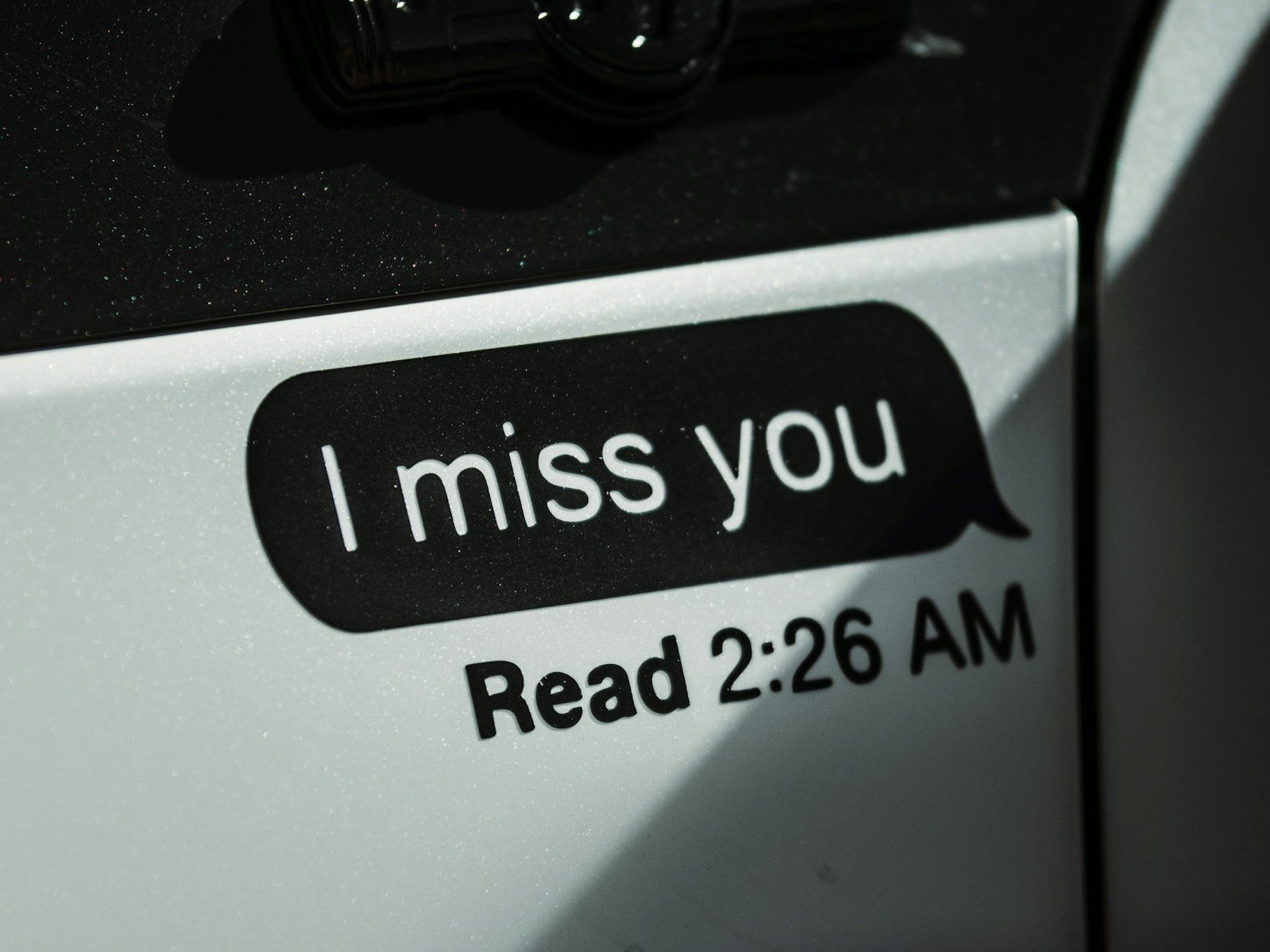
On Instagram, among other apps, digital communications make it possible for the sender of a message to see whether the recipient has seen or read their message. When hours or days go by without a response, having noted that the recipient indeed read a message, a sender can feel that they were left hanging, or “left on read.” Instagram, the so-called vanity app, also lets you surveil who has seen your “stories.” Maybe you too have had the experience in which someone who has read a private message of yours but not responded, then spends the following days or week viewing your story updates, but without responding to your message. In this context, it’s not difficult to see how passivity can turn into passive-aggression among social media users.
Let’s try to translate this digital dynamic into a real-world scenario. Imagine for a moment that you’re having an in-person conversation with a friend or lover. You’re both drinking coffee, listening in to the lilts and letters in the other’s voice and words. For twenty minutes, the conversation swings between thematic branches. You ask them a question and without any notable cause, they turn blank, staring vacantly at you for minutes on end. They then get up, leave the table, the cafe, and the neighbourhood to tend to whatever it is they need to tend to. But you’re still there, in the cafe and conversation, waiting for a response. Morning turns to afternoon, afternoon turns to evening, light to night, and you continue to gaze into the place where your friend’s mouth was moving, waiting for an answer. And you wait, and wait, and wait. A couple of days go by and you’re still sitting there in the proverbial position. Finally, your friend returns, sits down at the table, takes a sip of three-day old coffee, and answers your question as if there was nothing in their days-long departure that would warrant pause or protest.
Spaced Out and Squaring Off
This example, as superficial as it may seem, can shed light on our contemporary cageyness and conflicts. In virtual worlds, at least on a social level, no one is really expected to respond immediately as if they were sitting across from you. In fact, the above example is somewhat disingenuous, in part, because the “left on read” dynamic is so common today that the conversation plays out almost identically, albeit with both parties engaging in such behaviour. Friends and acquaintances orbit each other like satellites spaced out high above a grounded reality, passing occasionally by with fleeting responses. Being “left on read” is so common that the person in waiting not only ignores the expectation of a response, but inevitably embraces the same passive tendencies. At the end of the day, the structures of online communication (if it can still be called “communication”) are built to enable and ennoble this capacity, and subsequently, to conceal their effects on us. While they might appear to appeal to our patience, they are undermining our interpersonal response-abilities.
Let’s be honest: I do it, you do it, and mostly everyone we know does it. Such passivity probably didn’t begin with social media, but social media takes the passive aspects laden in the culture and doubles down, feeding us sedatives. In using such technologies, we acquiesce to living within a media ecology that absorbs the dominant dynamics and then, typically, alters or augments them to fit the frameworks and goals of the technologies in question. In this case, the goals are mounted and maintained by technocratic oligarchs who secretly sell passivity in all its submissive forms. This is both cause and consequence of the exponential passivization of the people.
Still, when we imagine (and sometimes rightfully so) that receiving a response is important if not mandatory, the passivity of one can easily turn into the passive-aggression of another. Why did it take you a week to respond, knowing that I needed the answer days ago? This seems to be the obvious outcome of a system hell-bent on passivizing, such that any kind of direct response to or rejection of one’s passivity is seen as aggressive, or aggressive-aggressive (as opposed to passive-aggressive). In an era of manufactured overwhelm and snowflake (in)sensibility, a clear and direct response can easily be equated – by the hyperpassive among us – as overkill, as offensive, even abusive. At times, such responses may indeed amount to such things. However, our reactions to them alongside our interpretations of those reactions are dictated by the intermediary languages and tools we accept as status quo.
Let’s be fair, the vast majority of working people living in late-stage capitalist economies are inundated by the requirements of modern life. Busy with work, partners, kids, hobbies, school, homework, and getting around. Busy in order to put food on the table and into bellies. Busy being addicted to the scroll and spectacle. The overwhelm cannot be understated, but it doesn’t simply get us off the hook. Acquiescing to passivity simply deepens the unlikelihood of things being otherwise in our time.
The roots of passivity among us surely existed long before social media and for myriad other reasons, whether personal, cultural, even theological. In my experience, the east-coasters of the United States tend toward very direct communication, which for many would border on aggression. West-coasters, on the other hand, have seemed to me to inhabit more passive perspectives. Maybe you’ve come to similar kinds of generalizations in your travels.
My time in Oaxaca has unveiled the communicative culture here to be one beholden to deep passivity (not without its direct, aggressive, or even violent iterations). This passivity likely stems from an old-time form of hospitality that carries with it dialects of discernment that speak more to subtlety and care, rather than ignorance. However, without a history of media ecology bound to a particular culture, time and place, the transformation of conscious subtlety into unconscious submission gets lost in the fray. It ends up being flippantly affirmed, as so many spells do in our time, as cultural essentialism (“that’s just the way they are”) or with epithets like “it’s always been this way.”
Direct Action
Meditating on the place of passivity in contemporary modern culture, I wonder how it is that we both consider and conceal notions of passivity. This very yarn could be understood as a passive (indirect) shot at friends and acquaintances regarding their own latent ways. Or, we could imagine that none of this is personal. As it happens, you’re not that vain, and this song ain’t about you. However, it is for you. Moreover, it is an attempt to try to pull the personal, as well as the passivity that provokes it, out of the song long enough so that we might be able to listen to the music of our times with different ears.
When I hear people speak of passivity, the word seems to emerge as being synonymous with “subtlety,” “sensitivity,” “humility,” “patience” and “pacifism.” However, none of these things come close to describing “passivity,” the synonyms for which are, in fact, “indifference,” “insensitivity,” and “apathy.” The mechanics of technocratic algorithms push us toward the latter behaviours, toward becoming susceptible and eventually helpless to the onslaught of external impressions and influences. The result is not only the conflation of subtlety with apathy and pacifism with passivity, but the wholesale loss of the former terms as living attributes of clear and concise communication.
In reconsidering the effects of passivity for this essay, a kind of rhythmic recall came swimming into my mind. It led me to revisit the song “Stinkfist” by Tool, whose lyrics can be read as an analogy for our contemporary attachments and addictions to machines:
Something has to change
Undeniable dilemma
Boredom's not a burden
Anyone should bear
Constant over-stimulation numbs me
But I would not want you any other way
Believe it or not, the song was released thirty years ago, long before social media and online algorithms. Their follow-up album Lateralus has a song called “Schism,” which seems to confer and confirm the consequences of our precarious passivity:
Cold silence has a tendency to
Atrophy any sense of compassion
Between supposed lovers
Between supposed brothers [1]
Today, social media users are both iniciatibias and expectatibias. We hedge our bets on social expectations while using little if any initiative to properly confront how those expectations are (mis)guided by the media we use (and are used by). Collectively, as passivity is pushed on us and into us, the capacity for direct action is endangered, both in communication with each other, and politically, against the systems that sedate the possibility of us being anything but passive puppets secured to social media strings. The possibility of direct action is dead on arrival, because “hey, all you have to do is ‘like’ or ‘share’ and you’ve done your duty.”
The spell is so deep that it's hard to imagine things being otherwise. And yet, we must imagine things otherwise. What kind of compassionate remedy might emerge in the face of cold silence that doesn’t bow to further discord? How might we reconvene our communication as a form of communion, finding the kindling to craft kinship among us? Considering everything you’ve been offered here, how might you take this little spark in your hands and carry it among your days?
[1] The recorded version of this song repeats the line “between supposed lovers,” however, in live renditions the second iteration of “lovers” is often replaced by “brothers.” According to Ultimate Guitar, singer Maynard James Keenan said that the tracks on Lateralus are “all about relationships, learning how to integrate communication back into a relationship. How are we as lovers, as artists, as brothers? How are we going to reconstruct this beautiful temple that we've built and that's tumbled down?”
Chris Christou
Chris Christou is a cultural ecologist, storyteller, and writer. He is the founder of Oaxaca Profundo Learning Journeys and the host of The End of Tourism Podcast. A graduate scholar of the Orphan Wisdom School, Chris writes about the crucible of culture, from food to psychedelics, exile, media and myth. www.chrischristou.net